Exit planning is the process of planning for the eventual sale or transfer of a business whereas succession planning is the process of identifying and developing internal employees or family members to fill key leadership positions with the aim of taking over the business one day. Issues exist for both topics and expert guidance and advice is recommended.
Succession Planning vs Exit Planning: Why Both Matter — And How Our STEP Programme Makes the Path Clear
When it comes to the future of your business, most owners don’t realise they’re facing two very different challenges:
Who will lead the business when you’re not there?
And when you’re ready to leave — will the business be worth what you hope?
These are not the same thing.
And confusing them is one of the biggest reasons NZ business owners leave money — and options — on the table.
At BSP Advisory Group, we see owners who exit with no plan, no choices, and too often only a fraction of the wealth they could have built with smarter preparation. That’s exactly why the STEP Programme was created — to guide owners from today’s reality to a future where the business is profitable, stable, and eventually sellable.
Below, we break down the key differences between succession planning and exit planning, and how STEP ties them together into one practical, easy pathway forward.
What is Succession Planning?
Succession planning is about developing internal people — family, senior staff, or emerging leaders — so the business can run smoothly without you.
It answers the question:
“If I step back, who steps up?”
Succession planning typically involves:
Identifying potential future leaders
Assessing their readiness
Building training and development pathways
Strengthening leadership layers
Reducing owner dependency
Protecting business continuity
Succession often includes family members, but not always.
Sometimes the most capable future owner is already in the building — a long-term manager, key technician, or someone with the right drive and values.
The impacts are significant:
Increased stability
Stronger culture
Improved retention
A more capable, accountable team
A business that can operate without the owner
This sits firmly in STEP Back — reducing owner dependency and building leadership that runs the business day-to-day.
We have an article called “Managing Succession in a Family Business – Challenges and Success” which is well worth a read as this topic can have its complexities too.

Interesting interview here about retirement in New Zealand and succession planning
Having a succession plan can also improve employee retention by providing clear career paths and opportunities for growth within the company.
What is Exit Planning?
Exit planning focuses on maximising business value and preparing for the eventual sale or transfer of the business.
It answers the question:
“When I step out, what do I walk away with?”
Exit planning includes:
Business valuation
Profit and margin uplift
Systems and process improvement
Financial and tax considerations
Identifying potential buyers
Transition planning
Preparing the business to look low-risk and high-value to a buyer
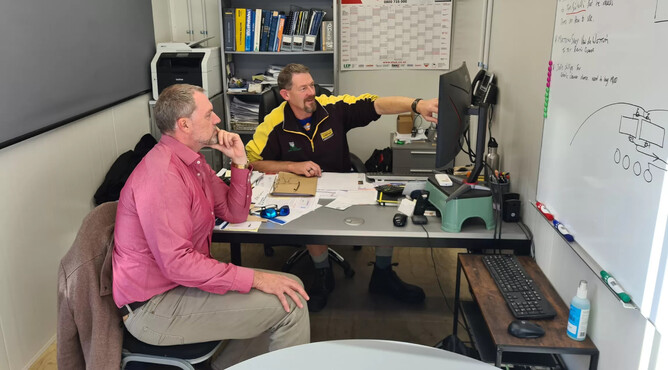
A well-executed exit plan increases:
Sale price
Buyer interest
Deal speed
Transition stability
Your confidence and peace of mind
Exit planning is where STEP Out comes in — giving owners a clear path to a financially rewarding, stress-free exit.
How STEP Programme Connects the Two
Most business owners think they’re planning their exit…
…but they’re actually missing the entire succession layer underneath.
In the STEP Framework:
STEP Up strengthens systems, processes, and profit — the foundation of a valuable business.
STEP Back builds leadership depth and reduces owner dependency — critical for both succession and sale.
STEP Out prepares the business for transition, valuation uplift, and ownership handover.
The magic happens when these three stages work together:
Strong systems → Strong leadership → Strong exit.
Owners who skip the first two stages often struggle to sell, struggle to step back, or struggle to get the valuation they want.
Why Both Matter for a Successful Future
Here’s the simplest way to think about it:
Succession Planning:
“Who will run this business when I’m not making every decision?”
→ leadership, stability, continuity.
Exit Planning:
“What’s my strategy to leave the business with the value I deserve?”
→ wealth creation, negotiation, transition.
Both are essential.
Both require no-fluff, practical planning.
Both determine whether you step out with choices — or compromises.
So… Which One Should You Focus On?
If you want to build leadership, reduce pressure, or take time back:
→ You need STEP Back (succession).
If you want to transition out within the next 2–7 years:
→ You need STEP Out (exit planning).
If you want both more profit today and more value tomorrow:
→ You need STEP Up + STEP Back + STEP Out working together.
The biggest mistake owners make is focusing only on the sale — without strengthening the business and leadership required to make that sale possible.
Why NZ Business Owners Should Start Now
Waiting too long is the #1 value killer.
Without early preparation:
The business stays too reliant on the owner
Leadership doesn’t develop
Systems remain patchy
Profit stays inconsistent
Buyers see risk, not opportunity
The sale price drops — sometimes dramatically
With early planning:
Leadership strengthens
Systems tighten
Profit lifts
Stress reduces
Buyers gain confidence
Your options multiply
You don’t just exit.
You exit well.
Ready to Understand Your Best Path Forward?
Whether you need to Step Up, Step Back, or Step Out, the STEP Programme gives you a clear, practical, advisor-led pathway to build a business that works for you — not because of you.
If you want clarity on which path is right for you, our advisors are here to help with a no-obligation conversation. Contact us here for a no obligation chat
This is your business.
Your wealth.
Your future.
Let’s make sure you get rewarded for the hard yards you’ve put in.


